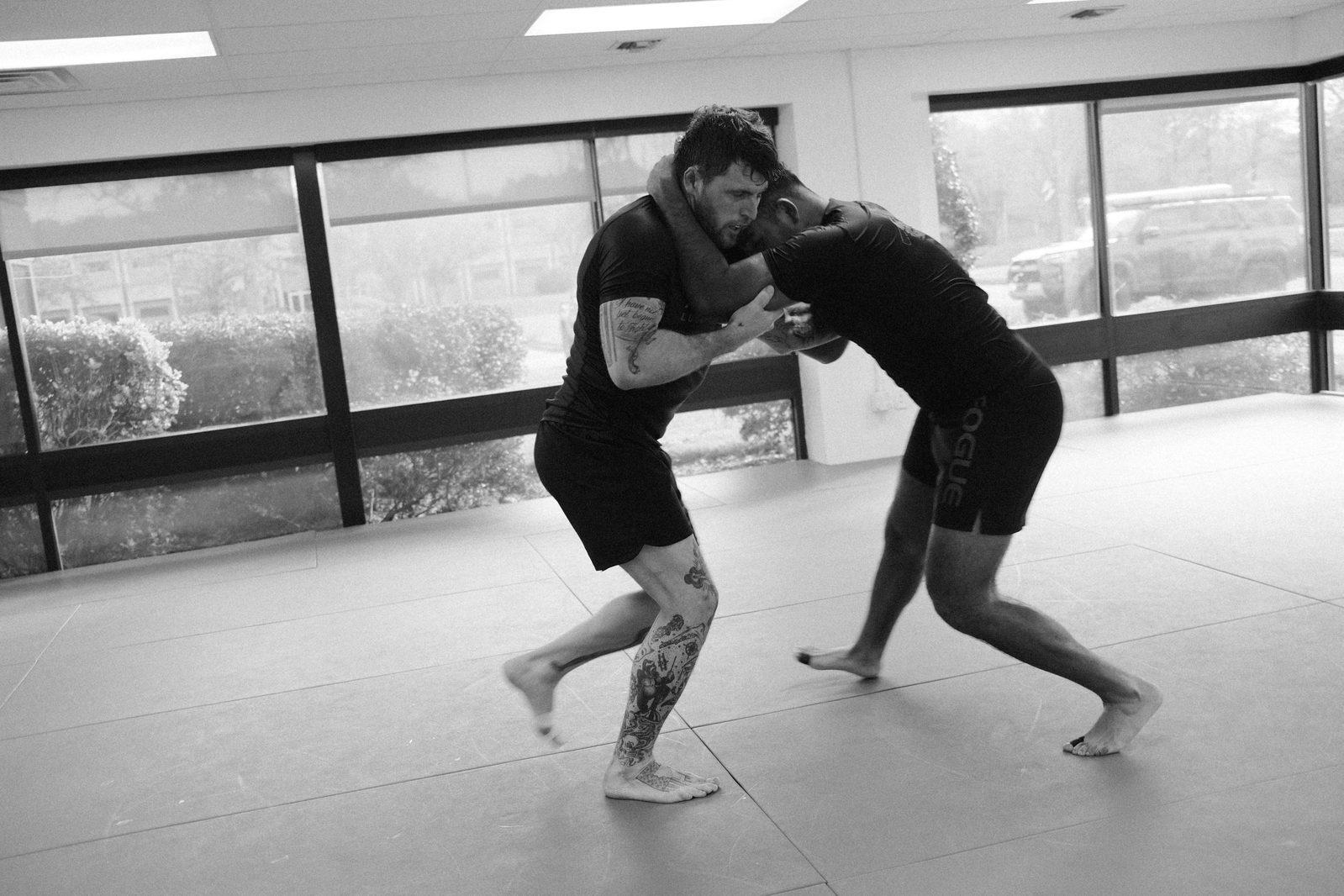
Your plan just died. You have two minutes. Here's the order.
Breathe. Assess. Decide one next action. Communicate it.
That's the 2-Minute Reset. Not a pep talk. A sequence. You run it in the same order every time, so you don't have to invent a response when your heart rate is already up.
I'm not going to talk you into feeling ready. Motivation is a feeling. This is a standard.
Plans break. They break in training. They break at work. They break at the dinner table. The body does the same thing every time: tunnel vision, rushed breathing, a loud story in your head.
The point is you already know this feeling. The launch slips. The deal dies. Your kid is in the back seat and the day just went sideways.
You don't need a better speech for that moment. You need an order.
This Is a Sequence, Not a Speech
In the SEAL teams we drilled the reset until it was boring. That was the point. When the plan falls apart, you do not want a creative response. You want the same first two minutes, in the same order, every time.
I teach this as the 2-Minute Reset: breathe, assess, decide one next action, communicate it. It is the order I use, and the order I teach to founders, operators, veterans, athletes, and fathers. It is not the official name of a Naval Special Warfare doctrine. The value is not in the title. The value is in running the same order under pressure, without waiting to feel ready.
People look for motivation when things break. That's the wrong hunt. The first two minutes are not for finding a feeling. They are for settling the body, telling the truth about what actually changed, picking one next move, and saying it out loud so other people can follow it.
If you skip the order, you will still do something. You'll just do it from panic, and you'll call it instinct.
Do everything with intention. That's how you go from chaos to command in ordinary hours, when you still have time to choose. The 2-Minute Reset is what you run when the time to choose just got cut down to two minutes, and your body is already trying to take the controls.
Step 1: Breathe
First: breathe. Not a sigh. A count.
Box breathing. In for four. Hold for four. Out for four. Hold for four. That's sixteen seconds. One round.
Do it now. Don't skip it because you're reading. Sit tall. Inhale for four. Hold for four. Exhale for four. Hold for four.
That's one round. I do more than one when I need it. But you don't wait until you "feel calm." You run the count, then you move to the next step.
People want a shortcut around this step. There isn't one. If your breathing is panicked, your thinking is panicked. Settle the body first. Then make one decision. Not five. One.
You don't need motivation. You need sixteen seconds.
This is also faith, for me. Psalm 46, verse 10: "Be still, and know that I am God." That's the King James. It isn't permission to freeze. It's a command to stop the noise long enough to tell the truth, and to remember who is actually in charge.
You still your body so the next decision isn't made out of panic. Practice it when it's easy, so it's there when it's not.
Step 2: Assess
Second: assess. Not the whole war. Two questions. What changed? What didn't?
Most of what you're spiraling about did not actually change. The work still exists. The people still exist. Your standard still exists. What changed is the path.
Name the facts only. Not the story. The story is "everything is ruined." The fact is "this one thing broke." Under stress, the mind wants a total narrative. Say the fact out loud. Keep it small enough to be true.
Start with what's under your control. On the range, when a shot feels off, most people go straight to the trigger. That's the last step. You start with the grip. The first thing you can actually put your hands on.

Same thing here. Don't start with the outcome. Start with the first thing you can control. That's why breath is step one, and why assess comes before you decide. This is the stoic part, and it's also the practical part. You cannot will a slipped launch back onto the calendar. You can name what moved, name what held, and put your hands on the next controllable piece.
A founder whose launch slips still has a team, a product, and a standard. A father who walks in after a bad day still has a table to sit down at. An athlete who missed a session still has today's work. Assess what moved, and what didn't, before you start rebuilding the whole week in your head.
Step 3: Decide One Next Action
Third: decide one next action. Not five. One.
This is where most people lose the two minutes. They breathe, they look around, and then they try to fix the whole mess at once. That's not a reset. That's panic with better posture.
One next action means the next right move, not the rest of the week. Call this person. Move the team to this room. Put the weight down and start the floor workout. Sit down at the table and close your mouth for a minute. One. If it will take three hours and six other people, it is a plan, not a next action. Plans are allowed. They just are not what the first two minutes are for.
Most teams skip this. Ten people make ten decisions and call it agility. That's not agility. That's noise.
Your team doesn't need a better plan in that moment. It needs a better first two minutes after the plan breaks. One leader. One next action. Said out loud.
A good decision now beats a perfect one after you've already burned the room down. Pick one action you can take in the next two minutes, and take it.
Step 4: Communicate It
Fourth: communicate it. Out loud.
A next action that stays in your head is a wish. Your team cannot follow a plan they cannot hear. Your family can't either. The standard you set in silence is a standard only you know about.
Say it simply. "Here's what changed. Here's what didn't. Here's the next move. Here's who does it."
Don't over-explain. Don't apologize for the plan breaking. Plans break. Your job in the first two minutes is to give people one thing to do, in a voice they can trust.
Calm is contagious. So is panic. Which one are you handing the room?
If you walk in hot, the room will match you. If you walk in settled, with one clear next move, the room has something to stand on.
If you're alone when it breaks — in the gym, in the truck, on a walk — still say the next action out loud. Hearing yourself name the move is part of the discipline. It takes the wish and turns it into a decision.
The Same Reset in the Five F's
Same four steps, wherever you live this. Faith, family, fitness, finances, and future do not get a different version of you when the plan falls apart. They get the same order.
- Faith: you stop, you pray, you hand over what isn't yours to carry. Be still first.
- Family: you walk in after a bad day and you do not let the wreckage set the tone at the table. Breathe. Assess. Decide how you're going to show up. Then say it, if someone needs to hear it.
- Finances: a client falls through. You don't build twelve new plans in an hour. You name what actually changed, and you take one next step.
- Fitness: you missed the workout. The standard doesn't move. You do today's floor, today, not next Monday.
- Future: the long plan slipped. You don't throw out the year. You pick the next right action and you take it.
The Five F's are the same life, under the same standard. The reset doesn't change because the setting does.
How to Run the 2-Minute Reset
Don't wait for the next bad day to practice this. Run it when it's easy, so it's there when it's not.
Here's the way I want you to use it.
When the plan breaks, give yourself two minutes. Not two hours of rumination. Not a meeting to "process." Two minutes, in this order.
1. Breathe. One full round of box breathing, minimum. In for four, hold for four, out for four, hold for four. Sixteen seconds. If your heart rate is still up, do another round. Do not skip this because it feels too simple.
2. Assess. Write or say three lines if you can: what changed, what didn't, and what's still under your control. Facts only. If you catch yourself telling the "everything is ruined" story, stop and go back to the fact.
3. Decide one next action. One. It has to be something you can start in the next two minutes, not a twelve-step recovery plan. If you have a list of five, you don't have a decision yet. Cut it down to one.
4. Communicate it. Say it out loud. If you lead people, use this exact shape: what changed, what didn't, the next move, and who does it. If you're on your own, say the next move anyway. Then go do that one thing.
A simple way to install this: once a day this week, when nothing is wrong, run one round of box breathing and name one next action for the hour in front of you. That's training. We don't train for the good days. We train for the days when nothing goes right and we have to perform anyway.
If you lead a team, drill it the same way. The first two minutes after a launch slips, a deal dies, or a plan gets torn up should be boringly familiar: one leader, one next action, said out loud. If everyone is improvising, you don't have a reset. You have noise.
Standards Don't Move When the Plan Does
That's the whole thing.
The plan is allowed to change. Your breathing, your assessment, your one next action, and your voice — those are the standard. They do not get renegotiated because the day went sideways.
You will not always feel ready. You don't have to. You have two minutes, and you have an order. Run it.
If you want a coach to run this with you, I work with people one-on-one in two ways. Fitness coaching is $450 a month — a training plan built around your body, your schedule, and your actual life. Operator Protocol 5F is the deeper work across faith, family, fitness, finances, and future: $6,000 for three months, or $9,000 for six months. Book a 30-minute call at calendly.com/alexrogerscoaching/30min.
If you lead a team, I teach this in two places: the keynote, "From Chaos to Command," and Survival Day, a hands-on half-day workshop for companies, built around Recon, Reset, and Break Free. Programs start at $25,000 and are quoted to your group size, location, and schedule. The same 30-minute call is the place to start, and you can also see more on organizational training: calendly.com/alexrogerscoaching/30min.
The plan just broke. You have two minutes. Use them.